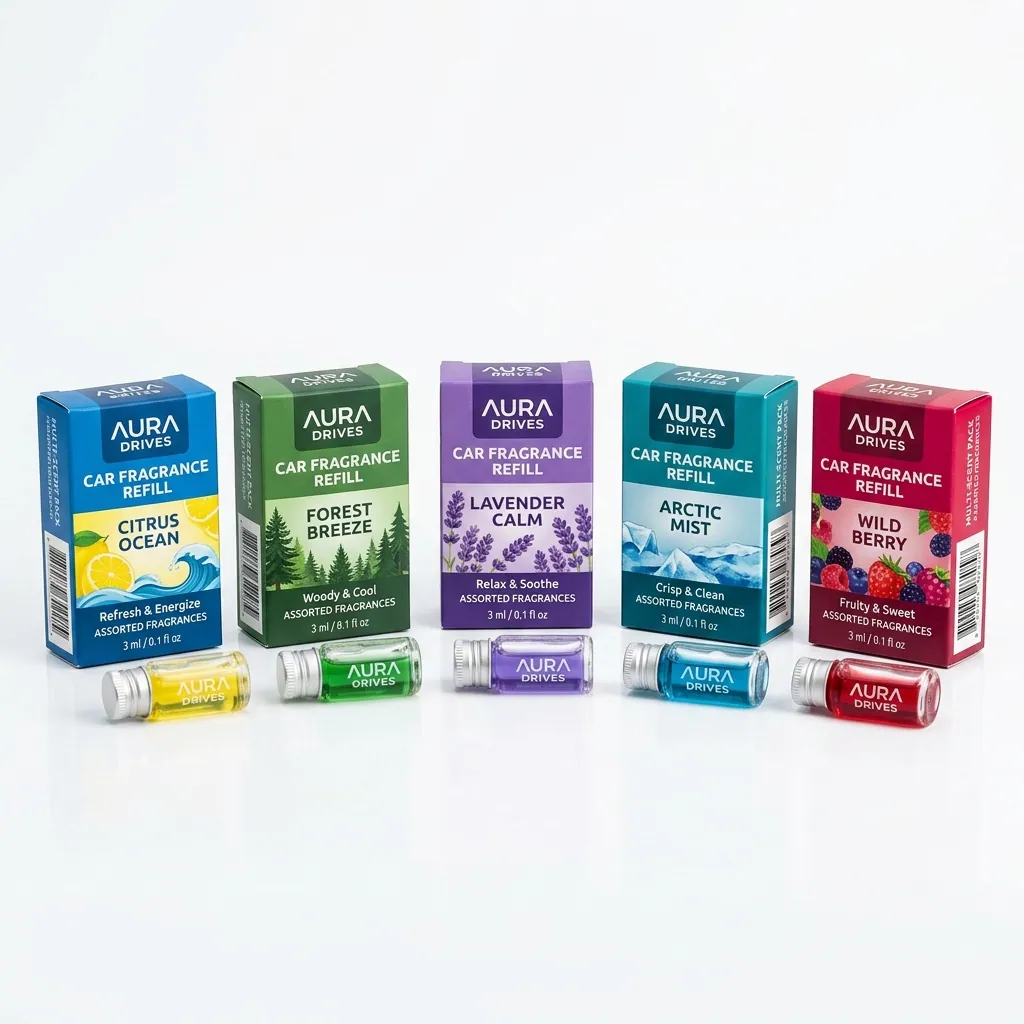
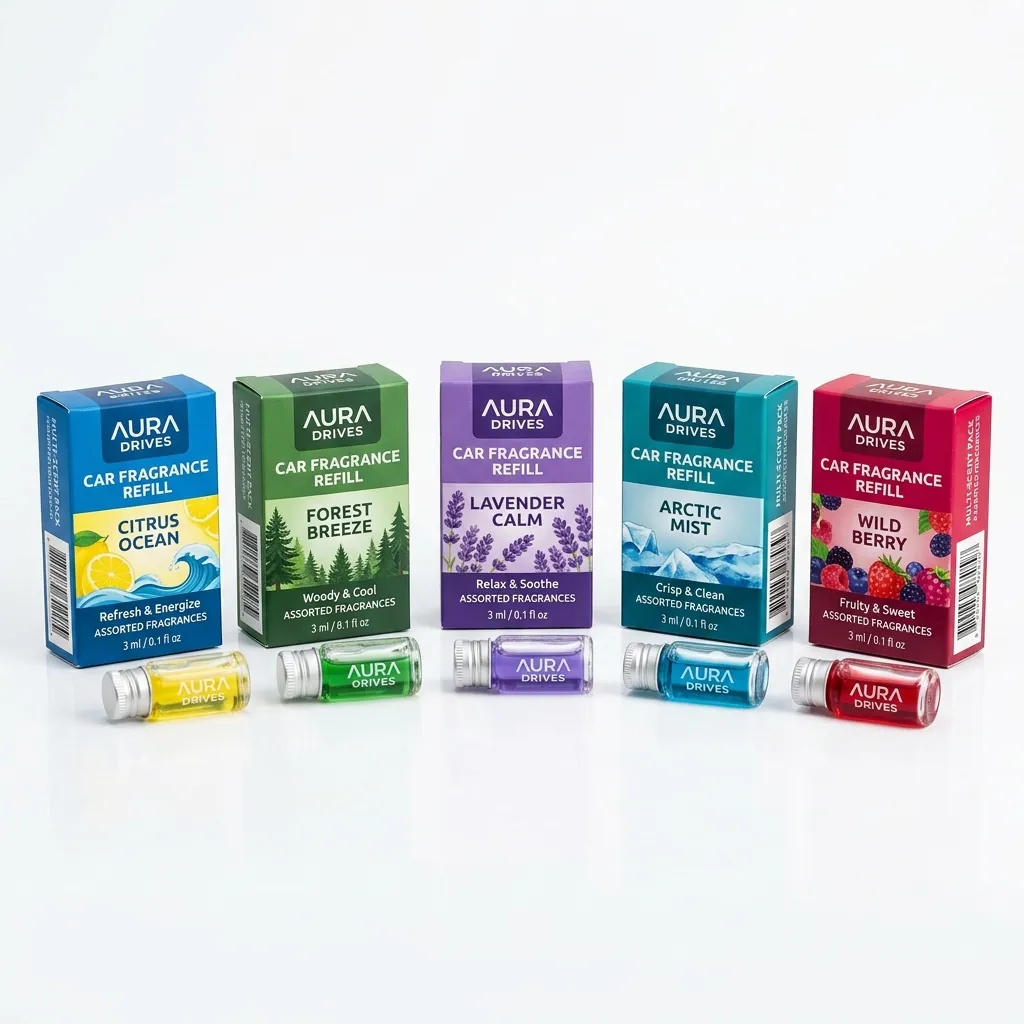
Fragrance names are marketing labels, not reproducible technical specifications. Two suppliers can call a fragrance “ocean” while delivering different character, strength, carrier behaviour, and documentation. Even the same formulation can smell different after storage or when loaded into another pad. A B2B buyer therefore needs a coded sample process that separates preference from compatibility and compliance. The goal is not to find a scent that every person loves. It is to choose a controlled option that fits the recipient, product format, intended use, pack, market, and refill plan with a clear route for repeat orders.
Start with LANDRE's custom car air freshener wholesale options to identify relevant product families, then use this guide to turn a visual shortlist into a decision-ready brief. The commercial page is a route to product evidence and an RFQ, not a substitute for sample approval or market-specific compliance review.
The Buying Decision in One Paragraph
Select a bulk car-air-freshener scent through a small coded shortlist, a defined evaluation method, formulation and carrier compatibility records, and destination-market review rather than choosing from a name alone.
A useful decision separates what is known, what must be measured, what the buyer must choose, and what a qualified compliance or logistics specialist must confirm. Record assumptions in writing. If a supplier changes a material, mechanism, fragrance, artwork revision, package, or route, reopen the affected approval instead of relying on an old photograph.
Decision Criteria That Change the Result
Define the Audience and Use Moment
State whether the item is a vehicle-handover gift, service reminder, retail product, event giveaway, or refill program. Ask the evaluation group to consider the recipient and cabin context, not personal home-fragrance preferences. Avoid unsupported demographic stereotypes. A neutral shortlist and an optional choice at distribution may work better than forcing one strong scent across a broad audience.
Evidence to retain: Program brief, recipient profile based on real campaign data, intended product, distribution moment, and selection rationale.
Use Coded Samples and a Consistent Evaluation
Blind or code the samples, evaluate the same carrier and loading, limit the panel to a manageable shortlist, and record initial character, perceived strength, comfort, and comments at agreed intervals. Allow fresh air between samples and do not treat a small internal panel as market proof. The process should narrow risk, not manufacture statistical certainty.
Evidence to retain: Sample codes, formulation references, carrier and loading record, evaluation instructions, results, and final selection approval.
Confirm Formulation, Carrier, and Refill Continuity
A chosen fragrance must remain linked to the formulation supplied for the intended application and the exact carrier dimensions and material. Ask how batches are referenced and how a future change will be reported. If refills are sold or distributed later, the refill code, pack, storage guidance, and product compatibility must be fixed before the first product order.
Evidence to retain: Fragrance code, intended-use documentation, carrier specification, batch or lot reference, refill SKU, and written change-notification rule.
Use the LANDRE product catalog to compare named SKUs and preserve the product ID in the brief. For product, logo, packaging, and fit questions that cannot be resolved on screen, move the shortlist into the physical sample kit workflow.
Specification and Evidence to Send the Supplier
A supplier cannot quote or reproduce details that remain implicit. Put the following information in one controlled request, give every artwork and specification file a revision, and ask the supplier to identify any unsupported assumption before pricing.
- Program audience, use moment, product format, destination markets, distribution channel, and expected reorder pattern.
- Coded fragrance shortlist, formulation reference, intended application, carrier material, loading method, and sample date.
- Evaluation protocol, panel size, questions, conditions, observation intervals, and decision owner.
- Refill dimensions, compatibility code, fragrance code, pack count, storage guidance, and reorder minimum.
- Consumer-facing fragrance name, claim boundaries, instructions, warnings, responsible-party details, and languages.
- Production lot reference, retained sample, supplier change notification, complaint traceability, and replacement route.
The factory workflow shows where the RFQ, artwork proof, sample, production, inspection, and export evidence belong. Use the factory FAQ to resolve standard process questions, then place product-specific exceptions in the written quote.

Approval Workflow From Shortlist to Production
1. Reduce the scent universe. Ask for a small family of contrasting options that fit the intended program instead of testing a long undifferentiated list.
2. Evaluate coded product-format samples. Use the same carrier, loading, room conditions, and questions, then document why the finalists advance.
3. Review documentation and market duties. Match the selected formulation to intended use and ask the responsible specialists which classification, label, transport, or other obligations apply.
4. Freeze the refill and change-control route. Link product, formulation, carrier, pack, lot reference, future refill, and supplier change notice in the order record.
Do not let approval live only in chat messages. Keep the final quote, artwork proof, physical-sample decision, packaging revision, inspection plan, and delivery instruction in the same order record. The detailed MOQ and sample approval guide explains how quantity tiers and approval gates should stay connected.
Risk Controls and Authoritative References
The main risks for this decision are predictable when the team names them before purchase:
- Selection by fragrance name: Approve a coded formulation in the actual carrier and product format; never use a marketing name as the repeat-order specification.
- Overstated duration: Describe the test conditions and avoid a universal performance promise because temperature, airflow, storage, loading, and preference vary.
- Formula drift: Require formulation and lot references, a retained sample, and written notification before any ingredient, supplier, or loading change.
- Missing market review: Have the responsible importer and compliance adviser assess the exact formulation, intended use, claims, label, pack, and destination.
Use the current fragrance-industry risk-management material to discuss intended use with the responsible fragrance supplier and compliance adviser; it does not replace destination-market law. Review the IFRA Standards with the responsible specialist before the order is released.
For EU-bound mixtures, first determine classification and the responsible supplier role, then verify whether CLP label or packaging duties apply to the exact formulation and pack. Review the ECHA labelling and packaging guidance with the responsible specialist before the order is released.
These sources are starting points, not certificates for a LANDRE product and not legal advice. The importer, brand owner, marketplace, carrier, and destination-country adviser should confirm which duties apply to the exact product, formulation, claims, packaging, and route.

Budget, MOQ, and Timeline Controls
Quote sample development, fragrance options, carrier loading, refill packing, and any documentation work separately. Compare the cost of one universal scent with a controlled multi-scent assortment only after the packing and allocation complexity is known. Reserve schedule for sample shipment, evaluation, documentation questions, and label approval. If the program depends on future refills, request price validity, minimum quantity, production lead time, and formulation-change rules for the refill before launching the main product.
Compare quotations on the same configuration. Separate unit price from artwork, tooling, samples, packaging, inspection, freight, duty, tax, distribution, and replenishment. Reserve time for buyer feedback and sample revision; a production lead time quoted before the artwork and sample are approved is not the same as a committed delivery date.
RFQ Checklist and Practical Next Step
Before sending the request, confirm:
- Intended recipient, use moment, product format, channel, and destination market.
- Small coded shortlist tied to formulation, carrier, loading, and sample date.
- Consistent evaluation method and a named decision owner.
- Supplier documents for intended use and responsible market review.
- Refill compatibility, pack count, reorder code, minimum, and storage guidance.
- Consumer name, instructions, warnings, claim boundaries, and languages.
- Retained sample, lot traceability, complaint route, and change notification.
Use the retail-ready automotive gift packaging guide for the adjacent decision, then send LANDRE a structured inquiry with the product IDs, quantity, market, artwork, package, deadline, and unresolved questions. A precise brief produces a more comparable quote and a safer approval path than asking only for the cheapest unit price.