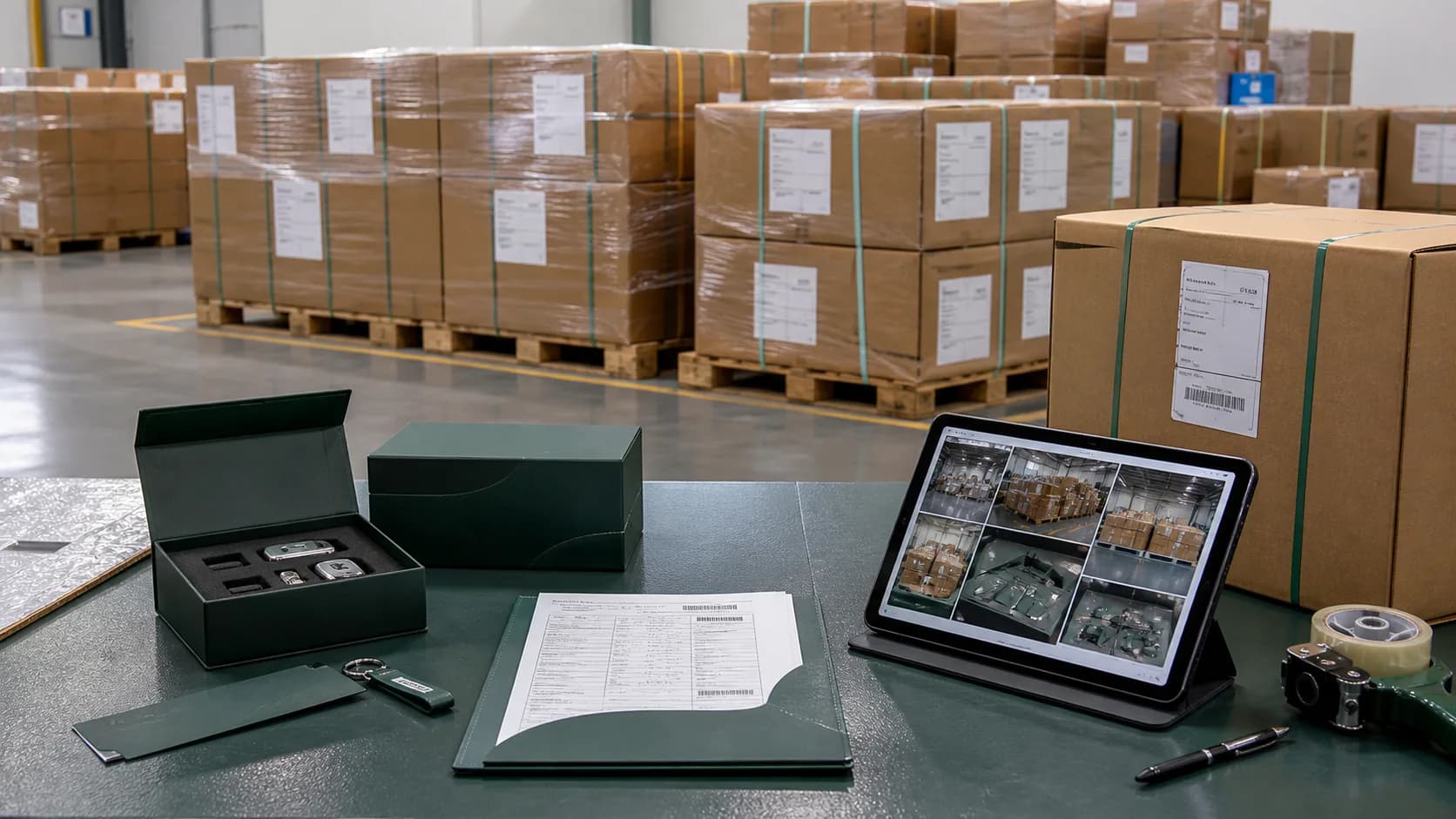
AQL is often used as shorthand for quality, but it is a statistical sampling framework, not a promise that a lot has no defects. The buyer and qualified quality team must define the lot, inspection level or plan, defect categories, acceptance limits, random selection, test methods, and disposition. Generic defect lists are weak for automotive gifts because a missing refill, wrong left-right pair, blocked solar panel, unstable base, incorrect logo, or unreadable instruction has different consequences. This guide helps buyers prepare product-specific inspection inputs and understand what the report can and cannot prove.
Start with LANDRE's automotive business gift sourcing options to identify relevant product families, then use this guide to turn a visual shortlist into a decision-ready brief. The commercial page is a route to product evidence and an RFQ, not a substitute for sample approval or market-specific compliance review.
The Buying Decision in One Paragraph
An AQL inspection works only after the buyer defines the exact lot, approved revision, random sampling plan, critical, major, and minor defects, methods, acceptance rules, package checks, evidence, and response to failure.
A useful decision separates what is known, what must be measured, what the buyer must choose, and what a qualified compliance or logistics specialist must confirm. Record assumptions in writing. If a supplier changes a material, mechanism, fragrance, artwork revision, package, or route, reopen the affected approval instead of relying on an old photograph.
Decision Criteria That Change the Result
Identify the Lot and Approved Revision
Define which production units belong to the lot, where they are stored, total quantity, SKU and variants, cartons, product and package revisions, and shipment split. Confirm production completion and presentation for random selection. An inspector cannot sample meaningfully when cartons are missing, variants are mixed without records, or the approved sample and specification do not match the lot.
Evidence to retain: Lot and carton list, SKU quantities, location, completion status, approved specification, golden sample, and release revision.
Classify Product-Specific Defects Before Inspection
Use qualified judgment to define critical, major, and minor defects and objective examples. Include safety or prohibited conditions, function, fit, movement, mounting, components, logo, colour, fragrance or refill where relevant, instructions, barcode, package, count, and carton. Severity depends on product and market; do not copy limits from an unrelated item without review.
Evidence to retain: Defect taxonomy, photographs or examples, severity rationale, measurements, functional methods, and approved acceptance plan.
Define Evidence and Failure Disposition
Specify photographs, measurements, videos, counts, sample IDs, carton numbers, test conditions, and report format. Decide before inspection who can accept, reject, rework, sort, replace, resample, or authorize a concession. A failed lot should trigger root-cause and correction evidence, not pressure to change defect classifications after results are known.
Evidence to retain: Inspection checklist, evidence requirements, authority matrix, failure workflow, corrective action, reinspection rule, and shipment hold.
Use the LANDRE product catalog to compare named SKUs and preserve the product ID in the brief. For product, logo, packaging, and fit questions that cannot be resolved on screen, move the shortlist into the physical sample kit workflow.
Specification and Evidence to Send the Supplier
A supplier cannot quote or reproduce details that remain implicit. Put the following information in one controlled request, give every artwork and specification file a revision, and ask the supplier to identify any unsupported assumption before pricing.
- Lot definition, location, completion, SKU and variants, quantity, cartons, shipment split, product and package revisions.
- Sampling standard and edition, plan or inspection level, sample size, random-selection method, and qualified owner.
- Critical, major, and minor defects for safety, function, fit, assembly, finish, logo, components, instructions, pack, and carton.
- Measurements, gauges, fixtures, function and fit methods, conditions, golden sample use, photographs, videos, and counts.
- Acceptance and rejection numbers, report format, sample and carton identity, deviations, concession authority, and hold.
- Correction, containment, sorting, rework, replacement, root cause, reinspection, release, retained evidence, and trend review.
The factory workflow shows where the RFQ, artwork proof, sample, production, inspection, and export evidence belong. Use the factory FAQ to resolve standard process questions, then place product-specific exceptions in the written quote.

Approval Workflow From Shortlist to Production
1. Approve plan before production closes. Fix lot, revision, sampling, defects, methods, evidence, acceptance, authority, and shipment hold while correction time remains.
2. Present and randomly sample the lot. Confirm completion, carton list, variants, accessibility, and random selection according to the approved qualified plan.
3. Inspect and preserve evidence. Record sample and carton identity, defects, measurements, functions, conditions, photographs, videos, counts, and deviations.
4. Dispose and improve. Hold shipment, decide acceptance or corrective action, verify rework or reinspection, and trend defects for the next order.
Do not let approval live only in chat messages. Keep the final quote, artwork proof, physical-sample decision, packaging revision, inspection plan, and delivery instruction in the same order record. The detailed MOQ and sample approval guide explains how quantity tiers and approval gates should stay connected.
Risk Controls and Authoritative References
The main risks for this decision are predictable when the team names them before purchase:
- AQL treated as zero defects: Explain sampling limits and use product-specific defect prevention, process controls, and critical checks in addition to final sampling.
- Defects defined after results: Approve categories, examples, methods, and limits before inspection and prohibit retroactive reclassification to pass the lot.
- Non-random showroom samples: Require accessible completed cartons and random selection from the defined lot and variants.
- Failed lot ships during debate: Place a documented shipment hold and require authorized disposition, correction evidence, and release.
ISO describes the current AQL-indexed lot-by-lot inspection standard; a qualified quality professional should select and apply the appropriate plan for the product and lot. Review the ISO 2859-1:2026 overview with the responsible specialist before the order is released.
The CPSC emphasizes safety-by-design, supply-chain controls, traceability, documentation, and ongoing awareness; final sampling should sit within those wider preventive controls. Review the CPSC manufacturing best practices with the responsible specialist before the order is released.
These sources are starting points, not certificates for a LANDRE product and not legal advice. The importer, brand owner, marketplace, carrier, and destination-country adviser should confirm which duties apply to the exact product, formulation, claims, packaging, and route.

Budget, MOQ, and Timeline Controls
Price inspection by location, lot, SKU count, sample size, methods, travel, report, reinspection, and any laboratory or specialist work. Allow time between inspection and shipment for correction; a report delivered after cargo cutoff has little operational value. Decide whether critical features need 100 percent process checks even when final inspection uses sampling. For repeat orders, trend defects and adjust prevention, supplier controls, or the qualified inspection plan rather than automatically increasing sample size.
Compare quotations on the same configuration. Separate unit price from artwork, tooling, samples, packaging, inspection, freight, duty, tax, distribution, and replenishment. Reserve time for buyer feedback and sample revision; a production lead time quoted before the artwork and sample are approved is not the same as a committed delivery date.
RFQ Checklist and Practical Next Step
Before sending the request, confirm:
- Defined completed lot, location, SKU and variants, quantity, cartons, shipment split, and approved revisions.
- Current qualified standard, plan, sample size, random method, inspector, fixtures, and conditions.
- Product-specific critical, major, and minor defects with examples, rationale, and limits.
- Dimensions, function, fit, movement, mount, components, logo, colour, refill, instruction, pack, and carton checks.
- Sample and carton identity, photographs, measurements, videos, counts, deviations, and report format.
- Shipment hold, authority, acceptance, concession, correction, sorting, rework, replacement, and reinspection.
- Release evidence, retained record, root cause, prevention, defect trends, and next-order review.
Use the golden sample and change control guide for the adjacent decision, then send LANDRE a structured inquiry with the product IDs, quantity, market, artwork, package, deadline, and unresolved questions. A precise brief produces a more comparable quote and a safer approval path than asking only for the cheapest unit price.