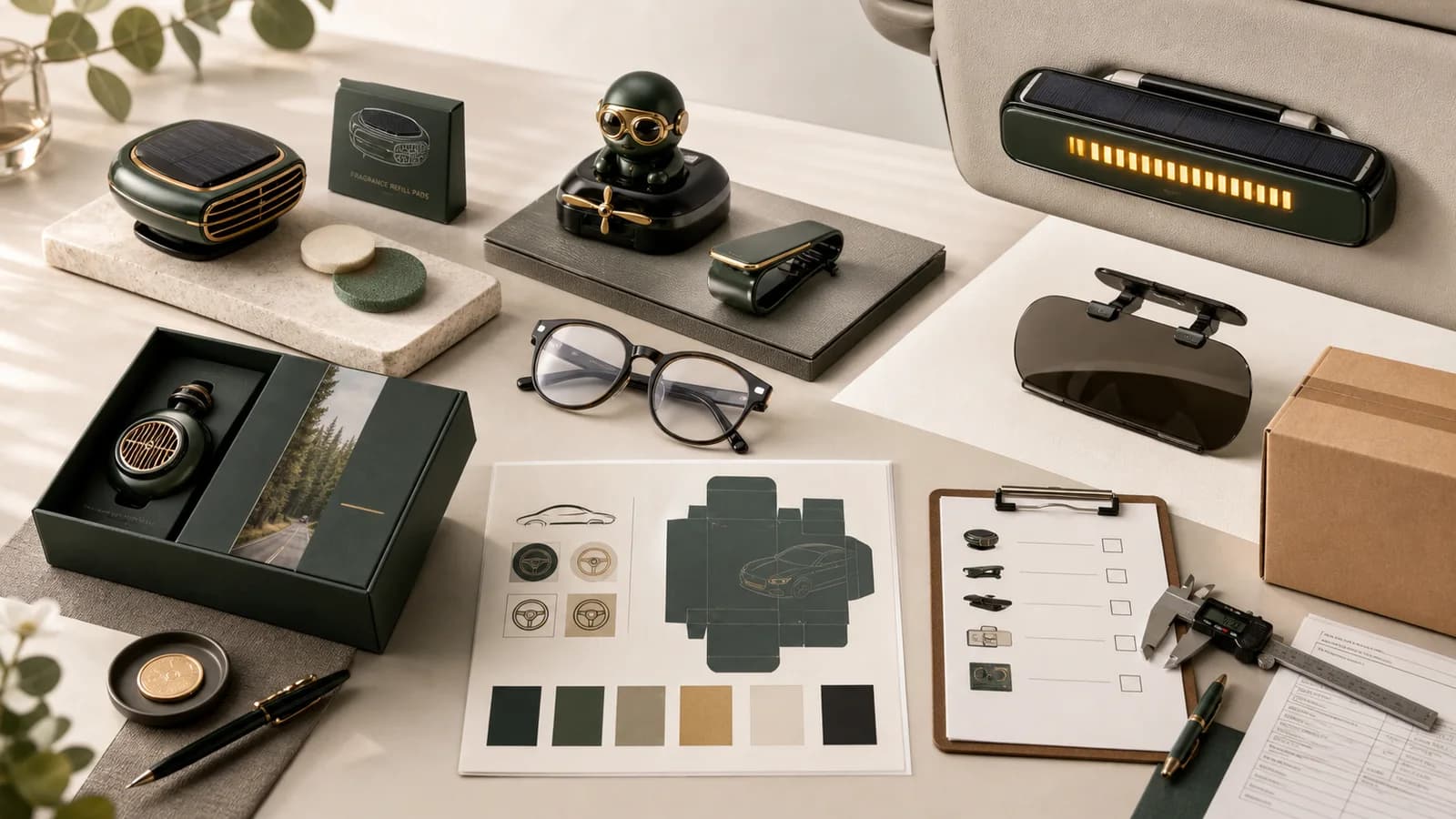
Receiving a sample is not the same as testing one. Teams often pass a product around, collect informal opinions, and approve it without recording the configuration, conditions, criteria, or unresolved questions. That creates a weak reference for production and repeat orders. A better plan is proportionate: it identifies the decisions that could harm the recipient, campaign, schedule, or inventory, then uses simple repeatable observations and qualified specialists where needed. This guide applies to dashboard ornaments, visor accessories, glasses clips, air fresheners, and automotive gift components. It does not replace product-specific laboratory or regulatory testing where that is required.
Start with LANDRE's custom dashboard ornament wholesale options to identify relevant product families, then use this guide to turn a visual shortlist into a decision-ready brief. The commercial page is a route to product evidence and an RFQ, not a substitute for sample approval or market-specific compliance review.
The Buying Decision in One Paragraph
A useful sample test plan begins with intended use and measurable pass criteria, assigns owners for appearance, fit, function, packaging, and compliance, records failures, and ends with a retained approved revision plus change-control rules.
A useful decision separates what is known, what must be measured, what the buyer must choose, and what a qualified compliance or logistics specialist must confirm. Record assumptions in writing. If a supplier changes a material, mechanism, fragrance, artwork revision, package, or route, reopen the affected approval instead of relying on an old photograph.
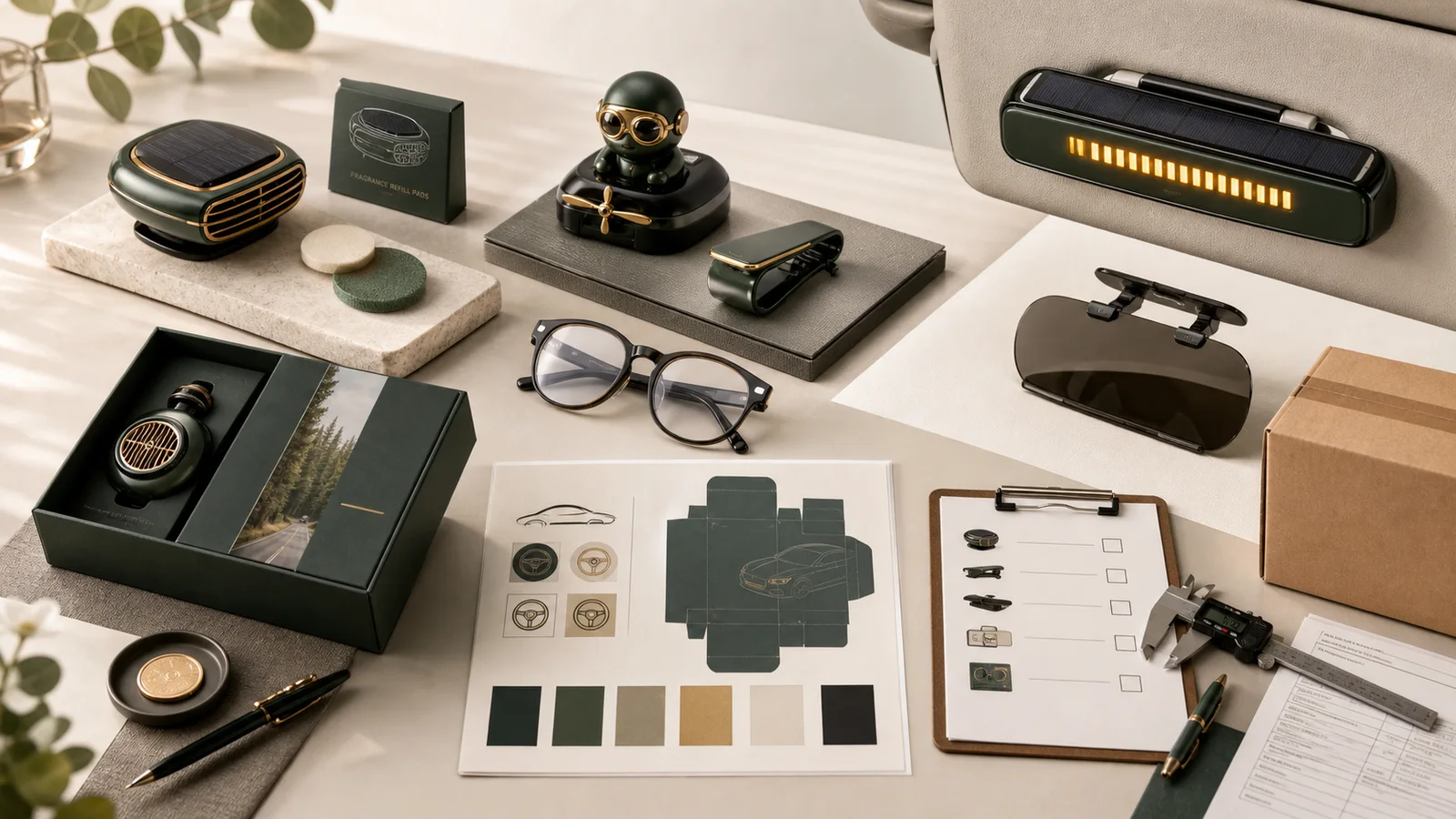
Decision Criteria That Change the Result
Write Intended Use and Pass Criteria Before the Box Arrives
Name the user, vehicle context, installation, use duration, environment, distribution channel, and prohibited uses. Convert vague goals such as “premium” or “strong” into observable references: approved colour sample, finish boundary, mounting condition, fit matrix, movement description, package protection, or defect example. If the team cannot describe a pass, it cannot explain a fail.
Evidence to retain: Sample plan, intended-use statement, decision owners, measurable or comparative criteria, and required specialist reviews.
Separate Review Lanes but Use One Sample Record
Marketing can assess relevance and brand appearance; engineering or operations can assess dimensions, assembly, movement, and mounting; quality can define defects and evidence; compliance and import teams can review market duties; packaging and logistics can assess protection and carton data. Combine those decisions in one versioned record so a visual approval does not hide an unresolved fit or label issue.
Evidence to retain: Cross-functional checklist, named reviewers, dated comments, photographs, measurements, open issues, and final disposition.
Test the Complete Delivered Configuration
Review the product with its decoration, insert, instructions, inlay, consumer pack, inner pack, and carton. Confirm that the product received for approval uses the quoted materials and mechanism. Record how it was handled and any limitations. A golden sample should be the final approved configuration, not an early undecorated prototype chosen because it arrived first.
Evidence to retain: Complete preproduction sample, component statement, packaging sample, inspection reference, signed approval, and retained unit.
Use the LANDRE product catalog to compare named SKUs and preserve the product ID in the brief. For product, logo, packaging, and fit questions that cannot be resolved on screen, move the shortlist into the physical sample kit workflow.
Specification and Evidence to Send the Supplier
A supplier cannot quote or reproduce details that remain implicit. Put the following information in one controlled request, give every artwork and specification file a revision, and ask the supplier to identify any unsupported assumption before pricing.
- Sample ID, product revision, supplier, date, quantity, purpose, materials, components, mechanism, decoration, and package revision.
- Intended user, vehicle or use environment, installation, duration, distribution channel, prohibited use, and market.
- Appearance, dimension, fit, function, movement, mounting, contact, repeated handling, package, and instruction criteria.
- Reviewer names and roles for brand, product, quality, packaging, logistics, compliance, and final business approval.
- Photographs, measurements, videos where useful, failures, deviations, corrections, retest scope, and unresolved questions.
- Golden-sample custody, defect examples, bulk inspection method, supplier change notification, and repeat-order reference.
The factory workflow shows where the RFQ, artwork proof, sample, production, inspection, and export evidence belong. Use the factory FAQ to resolve standard process questions, then place product-specific exceptions in the written quote.
Approval Workflow From Shortlist to Production
1. Plan the test and owners. Define risk-based checks, evidence, vehicles or fixtures, package levels, specialist input, and decision deadline before receipt.
2. Identify and inspect the sample. Verify revision and components, photograph condition, perform recorded checks, and distinguish observation from assumption.
3. Close failures through controlled revision. Describe each failure, assign correction, receive a named revision, and retest affected areas without erasing history.
4. Release one retained reference. Approve the complete configuration, label the golden sample, store evidence, and bind it to inspection and change control.
Do not let approval live only in chat messages. Keep the final quote, artwork proof, physical-sample decision, packaging revision, inspection plan, and delivery instruction in the same order record. The detailed MOQ and sample approval guide explains how quantity tiers and approval gates should stay connected.
Risk Controls and Authoritative References
The main risks for this decision are predictable when the team names them before purchase:
- Opinion-only approval: Convert subjective language into approved references and record conditions, reviewers, evidence, and remaining uncertainty.
- Wrong sample revision: Identify product, components, artwork, package, supplier, and date before testing and reject untraceable samples.
- Partial configuration review: Approve decoration, instructions, inlay, consumer pack, inner pack, and carton with the final product.
- Golden sample ignored after changes: Require written review whenever material, component, supplier, mechanism, dimension, artwork, pack, or process changes.
The CPSC recommends safety-by-design, documented specifications, supply-chain controls, and consideration of foreseeable use and misuse; buyers should identify the rules that apply to their product. Review the CPSC manufacturing best practices with the responsible specialist before the order is released.
EU-bound consumer products require a market-specific responsibility review; the Commission overview is a starting point for identifying business obligations and Safety Gate information. Review the European Commission product safety overview with the responsible specialist before the order is released.
These sources are starting points, not certificates for a LANDRE product and not legal advice. The importer, brand owner, marketplace, carrier, and destination-country adviser should confirm which duties apply to the exact product, formulation, claims, packaging, and route.

Budget, MOQ, and Timeline Controls
Include courier, sample quantity, decorated sample, packaging sample, test fixtures or representative vehicles, specialist review, correction rounds, and retained units in the project budget. Agree which sample costs are refundable, what counts as a supplier-caused remake, and how many revision rounds the schedule allows. The cheapest path is usually to reject unsuitable concepts at the digital and specification stage, then spend physical-sample effort on a narrow shortlist rather than testing many poorly defined variants.
Compare quotations on the same configuration. Separate unit price from artwork, tooling, samples, packaging, inspection, freight, duty, tax, distribution, and replenishment. Reserve time for buyer feedback and sample revision; a production lead time quoted before the artwork and sample are approved is not the same as a committed delivery date.
RFQ Checklist and Practical Next Step
Before sending the request, confirm:
- Named sample, product and package revisions, components, supplier, date, and purpose.
- Intended use, user, vehicle context, installation, environment, channel, market, and prohibited uses.
- Risk-based appearance, dimension, fit, function, mounting, movement, contact, instruction, and pack criteria.
- Named reviewers, specialist questions, decision deadline, and evidence format.
- Failures, deviations, correction owner, revised sample, and affected-area retest.
- Final decorated product, complete pack, carton, signed approval, and retained golden sample.
- Bulk inspection reference, defect examples, change controls, and repeat-order use.
Use the MOQ and sample approval buyer guide for the adjacent decision, then send LANDRE a structured inquiry with the product IDs, quantity, market, artwork, package, deadline, and unresolved questions. A precise brief produces a more comparable quote and a safer approval path than asking only for the cheapest unit price.