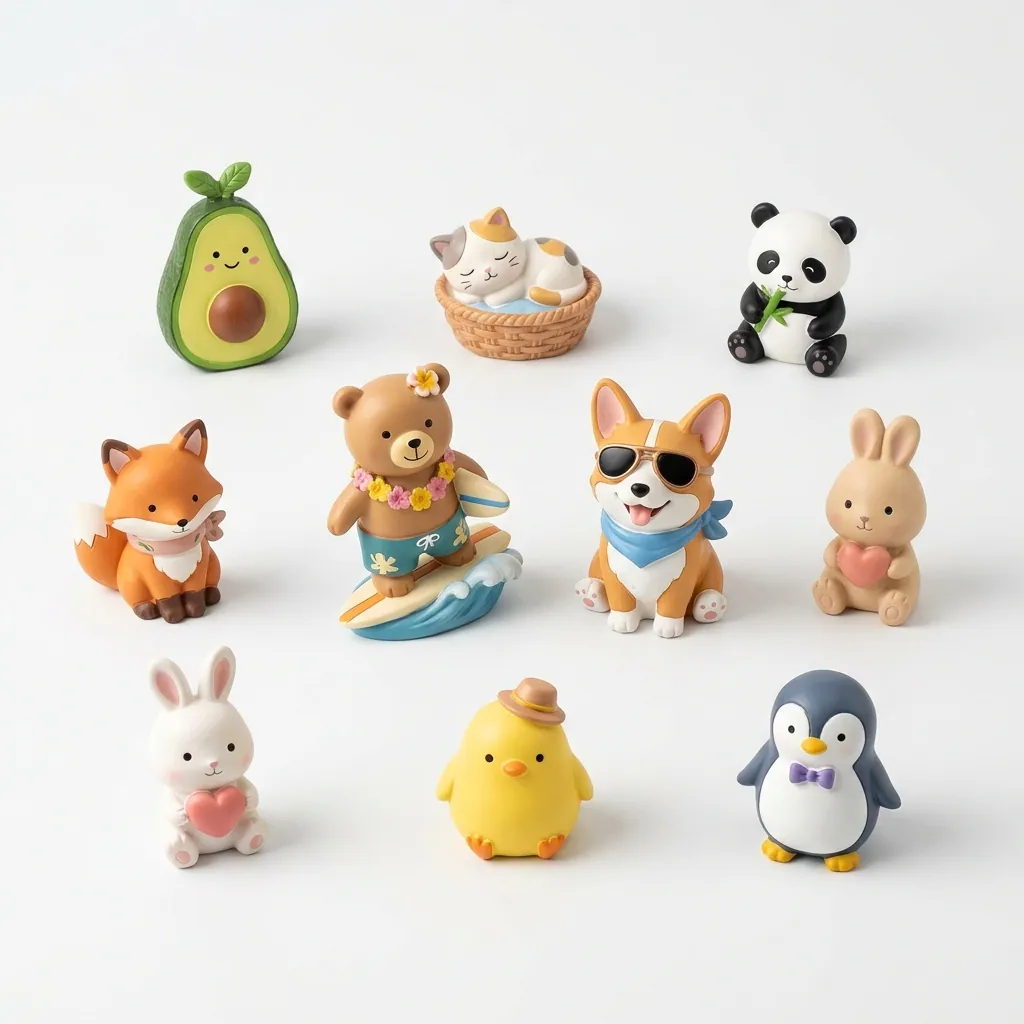
Turning a two-dimensional mascot into a dashboard ornament changes the character. A face that reads well on screen may lose expression at small scale; a dynamic pose may become unstable; brand colours may shift on molded and painted materials; and added movement may require a new centre of gravity. The buyer also needs the right to use the character on the product and package. Treating this as a simple logo-print order usually creates late redesign, unclear tooling ownership, and a prototype that marketing likes but quality cannot reproduce. This guide provides a practical path from character brief to an inspectable, repeatable physical object.
Start with LANDRE's custom dashboard ornament wholesale options to identify relevant product families, then use this guide to turn a visual shortlist into a decision-ready brief. The commercial page is a route to product evidence and an RFQ, not a substitute for sample approval or market-specific compliance review.
The Buying Decision in One Paragraph
A custom mascot ornament is a product-development project: clear the character rights, define the model and tooling scope, approve scale and movement, then lock colour, mounting, brand hierarchy, packaging, defects, and ownership in writing.
A useful decision separates what is known, what must be measured, what the buyer must choose, and what a qualified compliance or logistics specialist must confirm. Record assumptions in writing. If a supplier changes a material, mechanism, fragrance, artwork revision, package, or route, reopen the affected approval instead of relying on an old photograph.
Decision Criteria That Change the Result
Clear Rights and Define the Approved Character
Confirm who owns the mascot, which files and poses are approved, where the product will be distributed, whether partners appear, and how trademark or copyright notices should be used. The supplier needs written production authorization but should not receive broader rights than required. Freeze the reference expression, proportions, costume, colours, and prohibited modifications before modeling.
Evidence to retain: Rights owner approval, territory and use scope, authorized files, character sheet, notice rules, confidentiality, and supplier-use restrictions.
Choose Scale, Pose, and Movement as Engineering Decisions
Set the target height and dashboard footprint, then review silhouette, delicate features, undercuts, part count, assembly, weight, centre of gravity, and mounting. Movement can add personality but also complexity and instability. Ask for neutral render views and a prototype at real size. Marketing should approve likeness while engineering and quality approve reproducibility and fit.
Evidence to retain: Dimensioned model views, part breakdown, movement description, prototype, fit observations, and cross-functional approval.
Build Brand Hierarchy Beyond the Character
Decide whether the mascot itself is enough recognition or whether a base logo, flag, plate, insert card, or package mark is needed. Avoid shrinking a wordmark beneath the character until it becomes unreadable. Establish how the mascot, corporate logo, campaign line, legal notices, and partner marks relate at actual size on product and pack.
Evidence to retain: Brand hierarchy map, actual-size artwork proofs, colour and finish sample, decorated prototype, and complete package review.
Use the LANDRE product catalog to compare named SKUs and preserve the product ID in the brief. For product, logo, packaging, and fit questions that cannot be resolved on screen, move the shortlist into the physical sample kit workflow.
Specification and Evidence to Send the Supplier
A supplier cannot quote or reproduce details that remain implicit. Put the following information in one controlled request, give every artwork and specification file a revision, and ask the supplier to identify any unsupported assumption before pricing.
- Rights owner, authorized character sheet, approved pose, expression, proportions, colours, territory, use, and notice rules.
- 3D model scope, target height, footprint, part breakdown, material, finish, movement, assembly, weight, and mounting.
- Tooling items, ownership, storage, maintenance, modification approval, useful-life assumptions, and end-of-project handling.
- Product logo, partner marks, campaign copy, legal notices, package hierarchy, dimensions, methods, and artwork revisions.
- Prototype stages, likeness approval, engineering approval, fit review, colour sample, golden sample, and defect boundaries.
- Unit package, inlay, instruction, warnings, languages, carton, inspection evidence, reorder rights, and change control.
The factory workflow shows where the RFQ, artwork proof, sample, production, inspection, and export evidence belong. Use the factory FAQ to resolve standard process questions, then place product-specific exceptions in the written quote.
Approval Workflow From Shortlist to Production
1. Approve rights and character brief. Do not start modeling until authorized references, use scope, market, notices, confidentiality, and supplier restrictions are clear.
2. Review dimensioned model and prototype. Check likeness, scale, silhouette, parts, movement, stability, mounting, and manufacturability before final tooling.
3. Approve colour and brand hierarchy. Compare product finishes and package applications at actual size under agreed light and reference conditions.
4. Sign off the golden sample and ownership record. Freeze sample, defects, tooling, files, pack, inspection, reorder, and supplier change controls.
Do not let approval live only in chat messages. Keep the final quote, artwork proof, physical-sample decision, packaging revision, inspection plan, and delivery instruction in the same order record. The detailed MOQ and sample approval guide explains how quantity tiers and approval gates should stay connected.
Risk Controls and Authoritative References
The main risks for this decision are predictable when the team names them before purchase:
- Unclear character rights: Obtain written owner approval and define production use, territory, notices, confidentiality, files, and supplier restrictions.
- Likeness lost at small scale: Review silhouette and expression in a real-size prototype and simplify fragile details only with owner approval.
- Tooling dispute: Write who owns, stores, maintains, modifies, insures, and ultimately disposes of each tool and digital model.
- Unstable decorative pose: Balance character design with footprint, weight, movement, mounting, representative fit, and foreseeable-use review.
The CPSC recommends safety-by-design, documented specifications, supply-chain controls, and consideration of foreseeable use and misuse; buyers should identify the rules that apply to their product. Review the CPSC manufacturing best practices with the responsible specialist before the order is released.
EU-bound consumer products require a market-specific responsibility review; the Commission overview is a starting point for identifying business obligations and Safety Gate information. Review the European Commission product safety overview with the responsible specialist before the order is released.
These sources are starting points, not certificates for a LANDRE product and not legal advice. The importer, brand owner, marketplace, carrier, and destination-country adviser should confirm which duties apply to the exact product, formulation, claims, packaging, and route.
Budget, MOQ, and Timeline Controls
Separate concept adaptation, 3D modeling, prototype rounds, colour samples, engineering changes, tooling, decorated samples, unit packaging, inspection fixtures, and production. Set a revision allowance and approval timeline so unlimited aesthetic changes do not quietly consume the production window. A tooling deposit should not be paid without ownership, acceptance, modification, storage, and refund or remake terms. For a pilot, compare a branded stock character route with full custom development before committing to a new mold.
Compare quotations on the same configuration. Separate unit price from artwork, tooling, samples, packaging, inspection, freight, duty, tax, distribution, and replenishment. Reserve time for buyer feedback and sample revision; a production lead time quoted before the artwork and sample are approved is not the same as a committed delivery date.
RFQ Checklist and Practical Next Step
Before sending the request, confirm:
- Written rights, authorized references, territory, product use, notices, and supplier restrictions.
- Dimensioned model, real-size scale, parts, material, finish, movement, weight, base, and mounting.
- Prototype approval by character owner, engineering, procurement, quality, and market teams.
- Tooling scope, ownership, acceptance, storage, maintenance, changes, and end-of-project handling.
- Product and package brand hierarchy with actual-size artwork and colour approval.
- Golden sample, likeness and functional defects, inspection evidence, carton, and instructions.
- Revision budget, approval dates, production milestone, reorder rights, and change control.
Use the custom dashboard ornament wholesale guide for the adjacent decision, then send LANDRE a structured inquiry with the product IDs, quantity, market, artwork, package, deadline, and unresolved questions. A precise brief produces a more comparable quote and a safer approval path than asking only for the cheapest unit price.