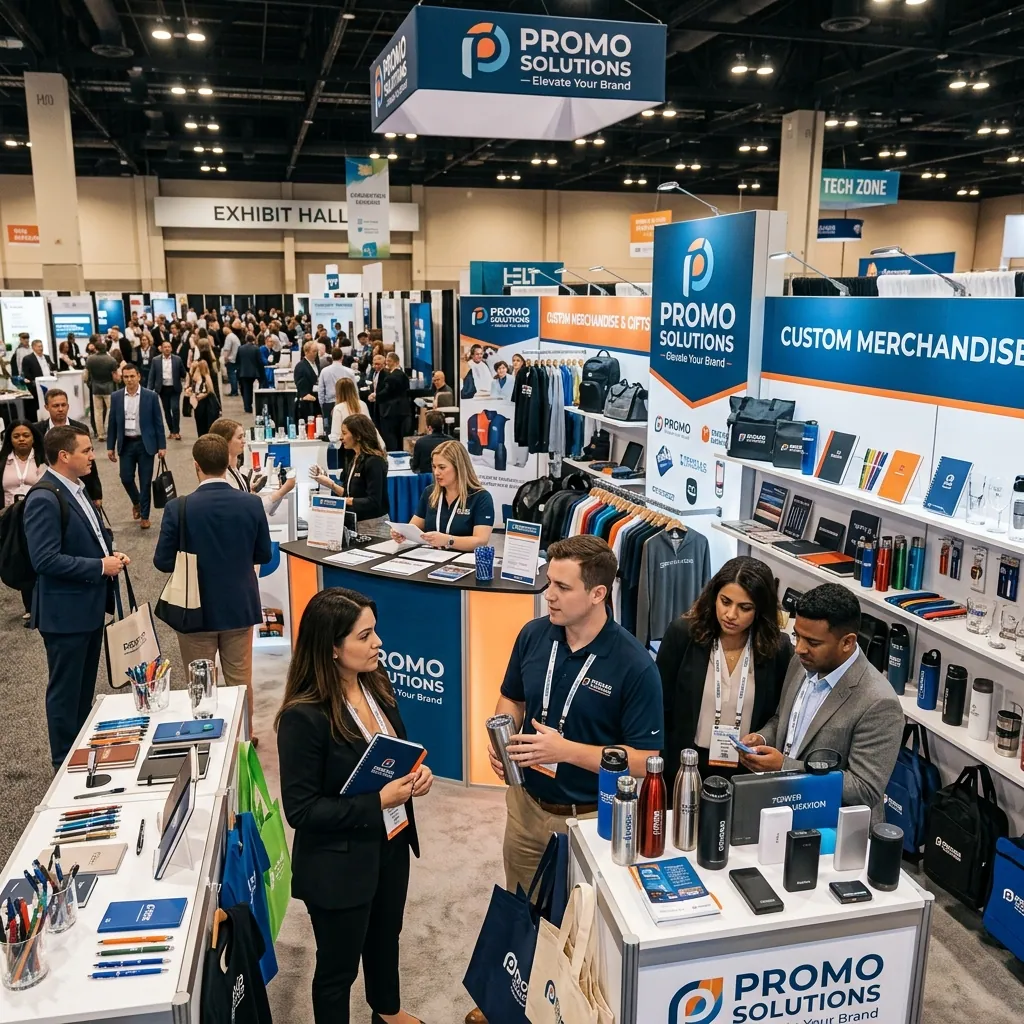
Event attendance is not giveaway demand. Visitors pass the stand, return, travel in groups, decline products, or need different items, while staff may distribute too quickly during busy periods. Ordering one unit per projected attendee usually creates waste or an early stockout. A better plan starts with the intended booth action: reward a qualified conversation, support a demonstration, welcome invited dealers, or provide a practical branded accessory. The product, quantity, staff script, packing, transport, and measurement should all support that action. This guide gives teams a simple way to plan without turning the giveaway into a disconnected pile of merchandise.
Start with LANDRE's automotive business gift set options to identify relevant product families, then use this guide to turn a visual shortlist into a decision-ready brief. The commercial page is a route to product evidence and an RFQ, not a substitute for sample approval or market-specific compliance review.
The Buying Decision in One Paragraph
An automotive event giveaway should serve a specific booth or campaign action, have a realistic distribution rate and useful product, travel in event-ready packs, and include a leftover and follow-up plan instead of being ordered from attendance alone.
A useful decision separates what is known, what must be measured, what the buyer must choose, and what a qualified compliance or logistics specialist must confirm. Record assumptions in writing. If a supplier changes a material, mechanism, fragrance, artwork revision, package, or route, reopen the affected approval instead of relying on an old photograph.
Decision Criteria That Change the Result
Define the Exchange, Not Just the Audience
State who receives the item and after which useful action: scheduled meeting, product demo, qualified scan with consent, dealer session, purchase, media pack, or general visit. Avoid making access unfair or collecting unnecessary data. Staff should be able to explain the rule in one sentence and distribute without blocking the booth. Use different tiers only when the team can identify them reliably.
Evidence to retain: Distribution rule, audience, action, staff script, data and consent review, tier logic, and exception owner.
Forecast Quantity From Moments and Rates
Estimate relevant visitors by day and session, the expected share that reaches the distribution action, staff capacity, invited groups, VIP reserve, damaged reserve, and a conservative leftover target. Use prior events where comparable. Keep daily stock separate so day-one enthusiasm does not consume the full supply. Document assumptions and prepare an adjustment trigger during the event.
Evidence to retain: Daily visitor model, conversion assumptions, session list, reserves, staff capacity, prior data, and allocation plan.
Pack for Travel, Booth Refill, and Leftovers
Use cartons that event staff can count, carry, open, and replenish. Protect products from repeated handling. Mark daily or booth allocation without exposing customer data. Decide where leftovers go before shipping: future events, dealer visits, service campaigns, staff use, donation where appropriate, or responsible disposal. Avoid event-specific dates on reusable products unless the campaign requires them.
Evidence to retain: Carton count, daily packs, booth storage, replenishment owner, travel protection, leftover destinations, and return plan.
Use the LANDRE product catalog to compare named SKUs and preserve the product ID in the brief. For product, logo, packaging, and fit questions that cannot be resolved on screen, move the shortlist into the physical sample kit workflow.
Specification and Evidence to Send the Supplier
A supplier cannot quote or reproduce details that remain implicit. Put the following information in one controlled request, give every artwork and specification file a revision, and ask the supplier to identify any unsupported assumption before pricing.
- Event, dates, city, audience, booth or campaign objective, distribution action, tier rules, owner, and consent boundary.
- Product IDs, usefulness, portability, installation or scent considerations, brand message, instructions, and alternative options.
- Daily relevant visitors, expected distribution rates, sessions, invited groups, staff capacity, reserves, and total quantity model.
- Logo, campaign copy, date use, QR or contact route where approved, languages, insert, pack, and artwork revisions.
- Unit packing, daily cartons, booth refill pack, travel protection, freight, venue deadline, storage, and return route.
- Complete sample, inspection, carton counts, staff guide, distribution measures, leftover plan, and post-event review.
The factory workflow shows where the RFQ, artwork proof, sample, production, inspection, and export evidence belong. Use the factory FAQ to resolve standard process questions, then place product-specific exceptions in the written quote.
Approval Workflow From Shortlist to Production
1. Choose the event action. Agree who receives the giveaway, when, why, and what staff says before selecting the product.
2. Build and challenge the quantity model. Use daily relevant traffic, action rate, staff capacity, invited groups, reserves, and a planned leftover level.
3. Approve product, message, and event packing. Test portability, use, instructions, brand, carton count, booth handling, transport, and deadline.
4. Measure and close the loop. Track daily issue, stock, exceptions, leftovers, follow-up action, and lessons for the next event.
Do not let approval live only in chat messages. Keep the final quote, artwork proof, physical-sample decision, packaging revision, inspection plan, and delivery instruction in the same order record. The detailed MOQ and sample approval guide explains how quantity tiers and approval gates should stay connected.
Risk Controls and Authoritative References
The main risks for this decision are predictable when the team names them before purchase:
- Attendance used as demand: Model the relevant audience and distribution action by day rather than multiplying total attendance by one unit.
- Day-one stockout: Prepack daily allocations, protect invited-group reserves, and assign one stock owner at the event.
- Travel damage or booth clutter: Approve event-ready carton size, count, protection, opening, replenishment, storage, and return packing.
- Unusable leftovers: Avoid unnecessary event dates and preassign future channels, ownership, storage, and responsible disposal.
Program owners should place safety, documented specifications, supplier controls, and traceable production records ahead of unverified claims or a purely visual product choice. Review the CPSC manufacturing best practices with the responsible specialist before the order is released.
When a gift becomes a retail or inventory-controlled unit, GS1 material helps teams distinguish product identification and scanning needs from decorative packaging artwork. Review the GS1 barcode standards overview with the responsible specialist before the order is released.
These sources are starting points, not certificates for a LANDRE product and not legal advice. The importer, brand owner, marketplace, carrier, and destination-country adviser should confirm which duties apply to the exact product, formulation, claims, packaging, and route.

Budget, MOQ, and Timeline Controls
Compare product cost with freight to venue, customs or temporary import questions where relevant, event deadline risk, daily packing, staff handling, damaged reserve, return freight, and leftover reuse. Request a production and delivery schedule with a buffer before venue receiving closes. For uncertain demand, consider a smaller premium tier plus a simpler general item rather than one oversized quantity. Do not use rush production to compensate for late artwork if it removes sample and inspection gates.
Compare quotations on the same configuration. Separate unit price from artwork, tooling, samples, packaging, inspection, freight, duty, tax, distribution, and replenishment. Reserve time for buyer feedback and sample revision; a production lead time quoted before the artwork and sample are approved is not the same as a committed delivery date.
RFQ Checklist and Practical Next Step
Before sending the request, confirm:
- Event objective, audience, distribution action, tier rule, staff script, owner, and data boundary.
- Useful portable product, installation or scent considerations, instructions, alternatives, and sample.
- Daily relevant traffic, action rate, staff capacity, sessions, invited groups, reserves, and total model.
- Brand, campaign copy, date strategy, contact route, languages, artwork, and reusable-leftover design.
- Unit pack, daily cartons, booth refill, storage, travel protection, freight, and venue deadline.
- Inspection, counts, staff guide, stock owner, daily measurement, exceptions, and leftovers.
- Post-event review, follow-up, next-use destinations, and assumptions to update.
Use the custom automotive gift artwork and sample guide for the adjacent decision, then send LANDRE a structured inquiry with the product IDs, quantity, market, artwork, package, deadline, and unresolved questions. A precise brief produces a more comparable quote and a safer approval path than asking only for the cheapest unit price.