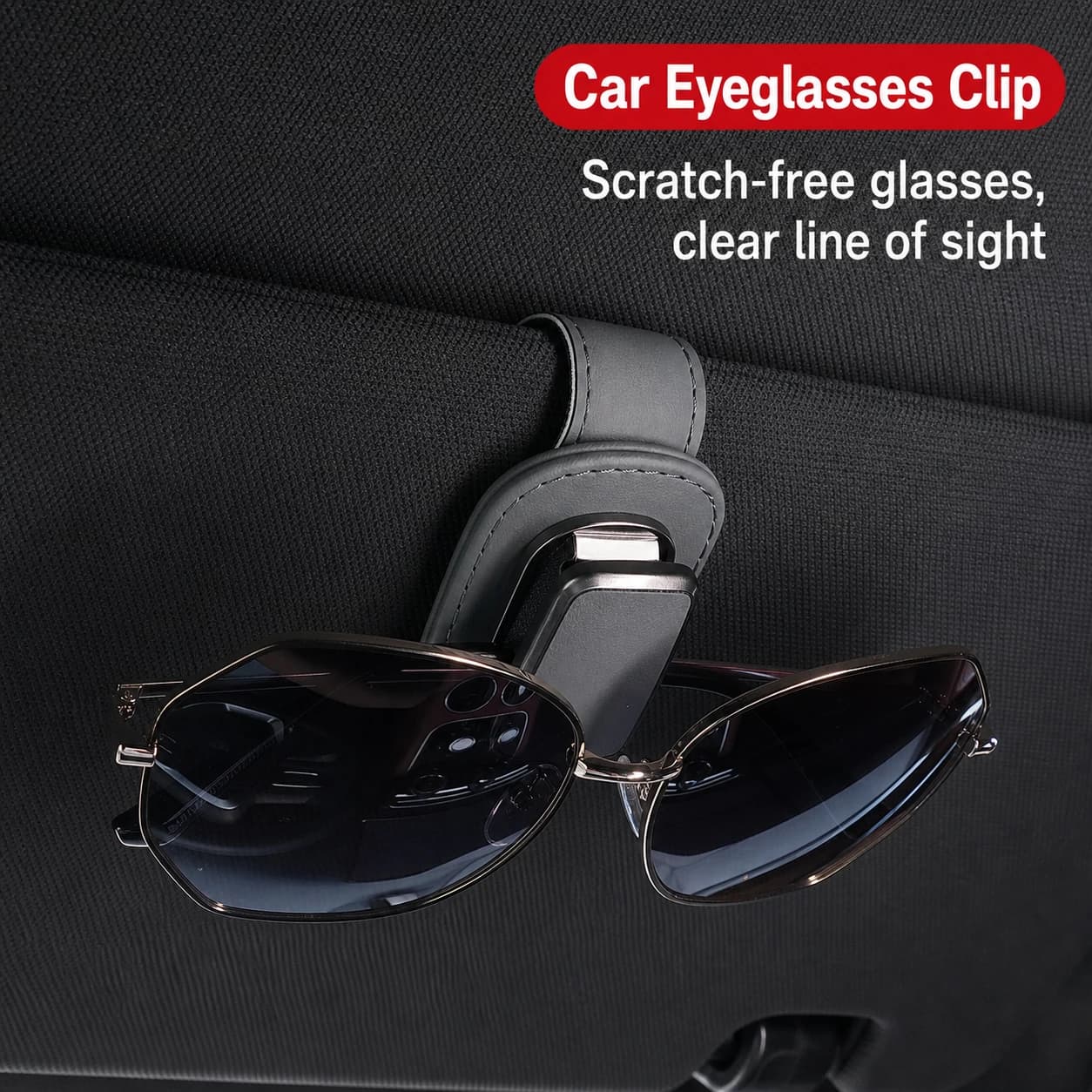
A car glasses clip is compact and apparently simple, yet its value depends almost entirely on fit. The clip must attach to a target visor without slipping or leaving unacceptable marks, hold relevant eyewear without crushing or scratching it, and release with reasonable effort. Visor thickness, upholstery, frame geometry, and user handling all vary, so a universal-fit claim needs more evidence than one demonstration. Buyers should define the program’s vehicles and eyewear assumptions, test the exact sample, and decide whether the item is a standalone retail accessory, a dealer handover gift, or one component of a larger automotive set.
Start with LANDRE's custom dashboard ornament wholesale options to identify relevant product families, then use this guide to turn a visual shortlist into a decision-ready brief. The commercial page is a route to product evidence and an RFQ, not a substitute for sample approval or market-specific compliance review.
The Buying Decision in One Paragraph
Choose a wholesale car glasses clip by testing the exact clip on representative visor thicknesses and eyewear frames, then approving grip, opening force, surface contact, logo, instructions, package, and retained sample.
A useful decision separates what is known, what must be measured, what the buyer must choose, and what a qualified compliance or logistics specialist must confirm. Record assumptions in writing. If a supplier changes a material, mechanism, fragrance, artwork revision, package, or route, reopen the affected approval instead of relying on an old photograph.
Decision Criteria That Change the Result
Measure Both Sides of the Fit
Record representative visor thickness, edge profile, material, and available installation space. Separately define the eyewear frame or small item the clip should hold, including thickness and contact points. A clip can fit the visor but fail the glasses, or grip the glasses while damaging a soft visor. Use a small fit matrix instead of the word universal.
Evidence to retain: Measured visor and frame references, fit matrix, exact samples, installation photographs, and pass or fail notes.
Evaluate Grip, Force, and Contact Surfaces
Observe installation force, retention, opening, release, one-handed handling where intended, vibration response under a suitable controlled method, and removal. Inspect pads, edges, springs, fasteners, and surfaces that contact the visor and eyewear. Specify materials and finish because a change in pad hardness or spring force can alter the entire user experience.
Evidence to retain: Component specification, force or comparative test method, contact inspection, repeated-use observations, and approved sample.
Decide the Best Branding and Pack Route
The product surface may allow a small mark, but an insert card or retail pack can provide better recognition, instructions, compatibility boundaries, barcode space, and gift-set context. Approve the product mark at actual size. If bundled with other accessories, check that the clip remains secured and cannot scratch the neighbouring product during distribution.
Evidence to retain: Logo proof, decorated sample, card or pack artwork, bundle inlay test, barcode zone, and complete pack approval.
Use the LANDRE product catalog to compare named SKUs and preserve the product ID in the brief. For product, logo, packaging, and fit questions that cannot be resolved on screen, move the shortlist into the physical sample kit workflow.
Specification and Evidence to Send the Supplier
A supplier cannot quote or reproduce details that remain implicit. Put the following information in one controlled request, give every artwork and specification file a revision, and ask the supplier to identify any unsupported assumption before pricing.
- Exact clip ID, dimensions, weight, body, spring or mechanism, pad, fastener, material, colour, texture, and finish.
- Representative visor thickness, edge, upholstery, installation space, and prohibited vehicle positions.
- Representative eyewear frame thickness, contact points, retention expectation, opening, removal, and surface protection.
- Logo surface, method, dimensions, colour, artwork revision, insert card, instructions, compatibility wording, and languages.
- Standalone or gift-set package, inlay, barcode space, unit quantity, inner pack, carton, and destination channel.
- Physical fit matrix, repeated-use observations, defect criteria, golden sample, inspection evidence, and change control.
The factory workflow shows where the RFQ, artwork proof, sample, production, inspection, and export evidence belong. Use the factory FAQ to resolve standard process questions, then place product-specific exceptions in the written quote.
Approval Workflow From Shortlist to Production
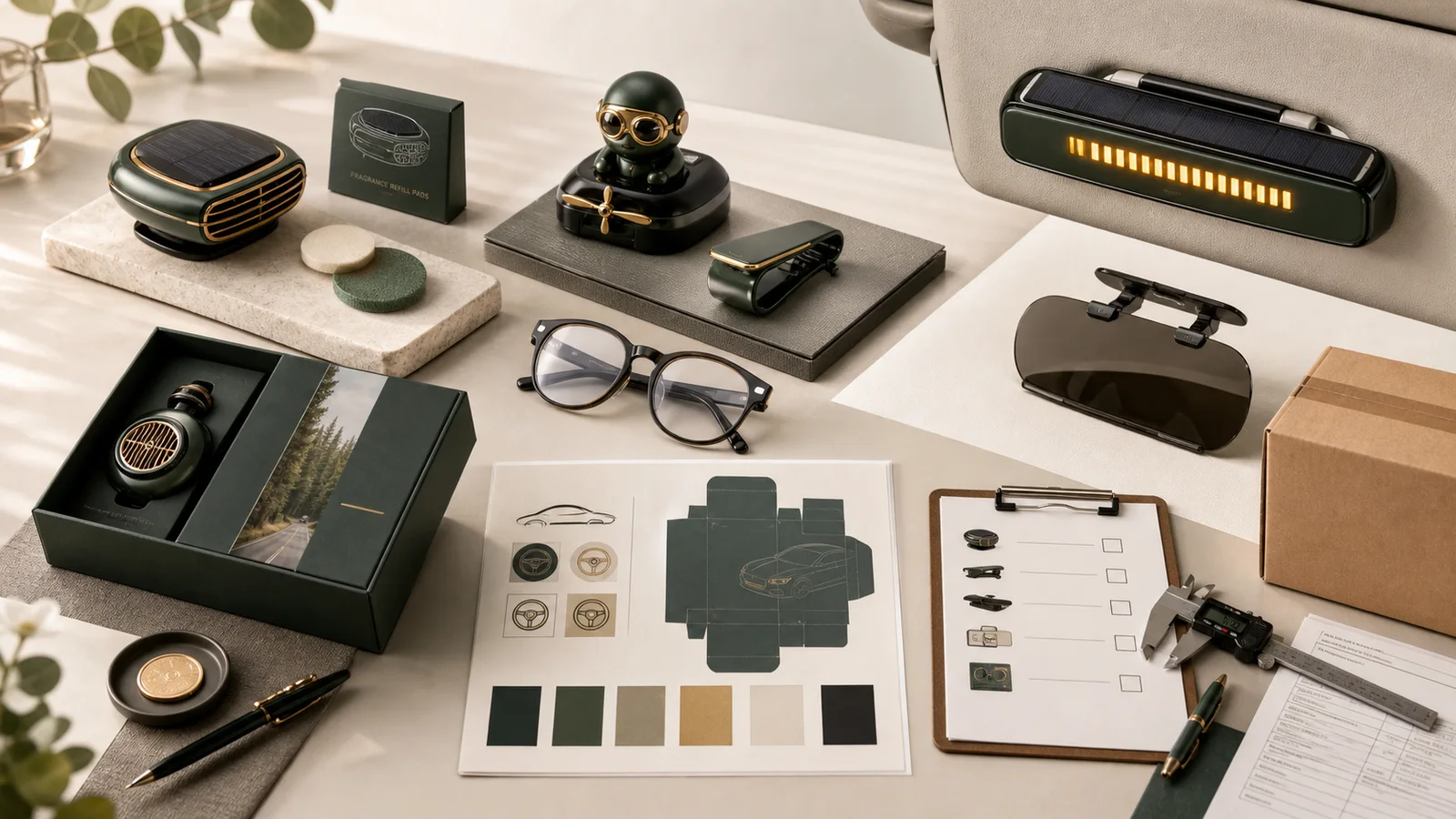
1. Define the fit matrix. Select representative visor and eyewear references, dimensions, materials, and pass criteria before requesting samples.
2. Compare exact undecorated samples. Check installation, retention, opening, release, surface contact, edges, mechanism, and repeat handling.
3. Approve branding and package. Confirm actual-size logo, instruction, compatibility wording, unit security, barcode area, bundle fit, and carton.
4. Freeze critical components. Control body, spring, pad, fastener, finish, package, and supplier changes against the approved sample.
Do not let approval live only in chat messages. Keep the final quote, artwork proof, physical-sample decision, packaging revision, inspection plan, and delivery instruction in the same order record. The detailed MOQ and sample approval guide explains how quantity tiers and approval gates should stay connected.
Risk Controls and Authoritative References
The main risks for this decision are predictable when the team names them before purchase:
- False universal-fit assumption: Publish tested boundaries and a fit matrix rather than extrapolating from one visor and one pair of glasses.
- Surface damage: Inspect all contact materials and edges, test installation and removal, and define unacceptable marks or scratches.
- Grip changes after substitution: Treat spring, pad, fastener, material, and geometry as critical components requiring change approval.
- Loose product in a gift set: Approve the complete inlay and distribution pack so the clip cannot migrate or damage other items.
The CPSC recommends safety-by-design, documented specifications, supply-chain controls, and consideration of foreseeable use and misuse; buyers should identify the rules that apply to their product. Review the CPSC manufacturing best practices with the responsible specialist before the order is released.
EU-bound consumer products require a market-specific responsibility review; the Commission overview is a starting point for identifying business obligations and Safety Gate information. Review the European Commission product safety overview with the responsible specialist before the order is released.
These sources are starting points, not certificates for a LANDRE product and not legal advice. The importer, brand owner, marketplace, carrier, and destination-country adviser should confirm which duties apply to the exact product, formulation, claims, packaging, and route.
Budget, MOQ, and Timeline Controls
Ask for quantity tiers on one fixed component specification and show separate prices for logo, insert card, retail blister or box, gift-set inlay, barcode application, and split cartons. If the clip uses different springs or pad materials across colours, treat those as separate configurations until equivalence is demonstrated. Budget at least one fit-sample round and one decorated-pack round. The purchase order should forbid unapproved substitutions to the grip mechanism or contact materials even if the exterior appearance is unchanged.
Compare quotations on the same configuration. Separate unit price from artwork, tooling, samples, packaging, inspection, freight, duty, tax, distribution, and replenishment. Reserve time for buyer feedback and sample revision; a production lead time quoted before the artwork and sample are approved is not the same as a committed delivery date.
RFQ Checklist and Practical Next Step
Before sending the request, confirm:
- Representative visor and eyewear dimensions, materials, fit matrix, and pass criteria.
- Exact clip body, spring, pad, fastener, geometry, colour, finish, and contact surfaces.
- Installation, retention, opening, release, repeated use, removal, and damage observations.
- Actual-size logo proof, decorated sample, compatibility wording, instructions, and languages.
- Standalone or gift-set inlay, product security, barcode area, inner pack, and carton.
- Critical-component change control, defect examples, golden sample, and inspection evidence.
- Quantity tiers, decoration and package charges, sample rounds, lead time, and delivery plan.
Use the automotive accessory sample testing guide for the adjacent decision, then send LANDRE a structured inquiry with the product IDs, quantity, market, artwork, package, deadline, and unresolved questions. A precise brief produces a more comparable quote and a safer approval path than asking only for the cheapest unit price.