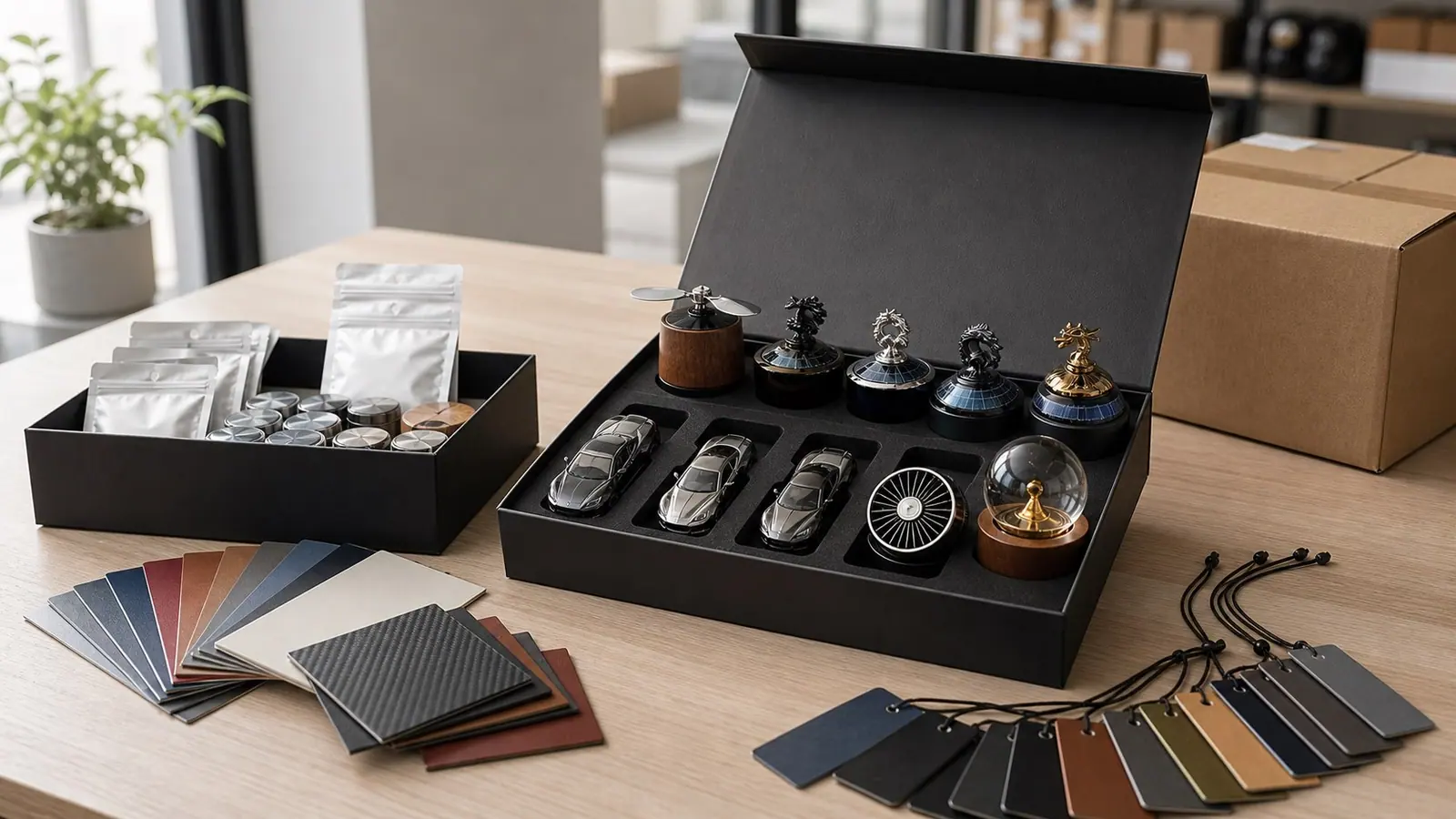
Laser engraving is often described as permanent and precise, but the visible result depends on the material, coating, laser process, artwork geometry, mark size, and viewing conditions. A detailed multicolour logo does not automatically become a clear engraved mark. Fine gaps can close, thin lines can disappear, and contrast may differ across anodized, painted, plated, or bare surfaces. The buyer should provide a controlled monochrome vector and approve the actual product surface. This guide focuses on file and proof preparation; the supplier remains responsible for confirming supported material and process parameters, while the buyer approves the brand result.
Start with LANDRE's custom car air freshener and branded accessory options to identify relevant product families, then use this guide to turn a visual shortlist into a decision-ready brief. The commercial page is a route to product evidence and an RFQ, not a substitute for sample approval or market-specific compliance review.
The Buying Decision in One Paragraph
Prepare laser artwork as a clean vector, simplify detail to the confirmed process limit, define exact size and orientation on a named material and coating, then approve contrast and defects on a production-representative sample.
A useful decision separates what is known, what must be measured, what the buyer must choose, and what a qualified compliance or logistics specialist must confirm. Record assumptions in writing. If a supplier changes a material, mechanism, fragrance, artwork revision, package, or route, reopen the affected approval instead of relying on an old photograph.
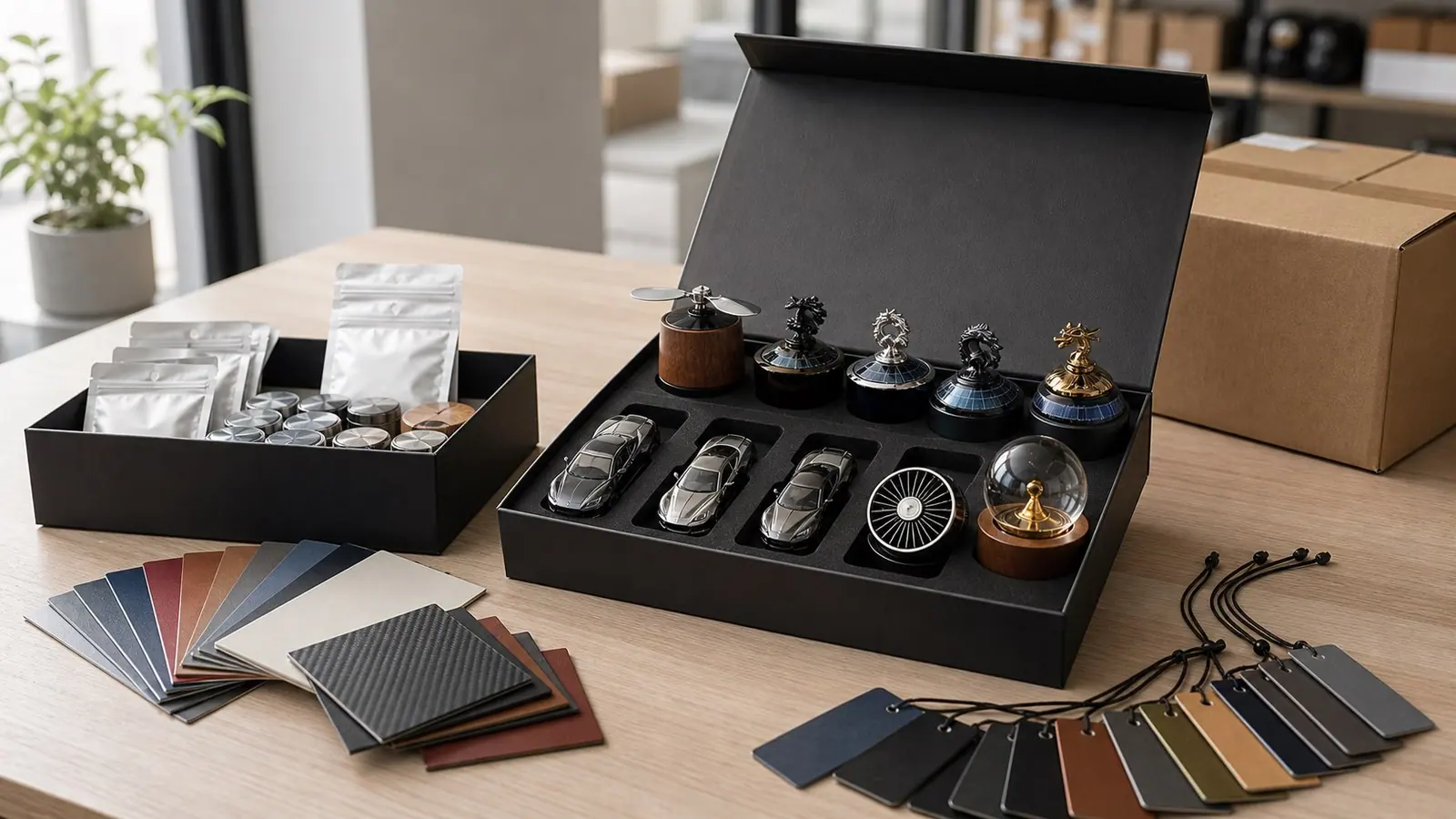
Decision Criteria That Change the Result
Build a Production-Specific Vector
Use clean closed paths, outline fonts, remove hidden objects and duplicate lines, and provide a one-colour version that does not rely on gradients, transparency, or photographic shading. Preserve the brand’s required proportions and clear space. If simplification changes a protected mark, obtain brand-owner approval instead of letting the production artist improvise.
Evidence to retain: Controlled vector, outlined-font file, monochrome and reversed variants, brand-owner approval, and revision code.
Confirm Detail at Final Mark Size
Ask the supplier for supported minimum line, gap, text, and registration limits on the exact material and process, then print the proof at actual size. Remove detail below the agreed limit or increase the mark within the usable area. Evaluate normal viewing distance and contrast; a zoomed screen view can make an unreadable physical logo seem acceptable.
Evidence to retain: Final dimensions, process limits, actual-size print, normal-distance review, and approved simplified artwork.
Approve Material, Coating, Contrast, and Orientation
Name the component, material, colour, coating, texture, curvature, and mark location. Laser response may remove or alter a coating rather than colour the base. Check contrast under realistic light and after assembly. The mark orientation should be correct in intended use, not only when the loose component lies flat on a table.
Evidence to retain: Surface specification, method statement, dimensioned proof, engraved sample, installed orientation, and visual defect examples.
Use the LANDRE product catalog to compare named SKUs and preserve the product ID in the brief. For product, logo, packaging, and fit questions that cannot be resolved on screen, move the shortlist into the physical sample kit workflow.
Specification and Evidence to Send the Supplier
A supplier cannot quote or reproduce details that remain implicit. Put the following information in one controlled request, give every artwork and specification file a revision, and ask the supplier to identify any unsupported assumption before pricing.
- Brand-owner-approved vector, monochrome and reversed variants, outlined fonts, clear space, minimum size, and revision.
- Exact product and component, material, alloy or grade where relevant, colour, coating, texture, curvature, and finish.
- Laser method supported by supplier, final width and height, position datum, orientation, protected zones, and contrast target.
- Confirmed minimum line, gap, text or detail, artwork simplification, actual-size proof, and viewing distance.
- Engraved physical sample, colour and contrast decision, surface change, alignment, cosmetic defects, and retained reference.
- Package contact, scratch protection, inspection method, artwork archive, repeat-order setup, and change control.
The factory workflow shows where the RFQ, artwork proof, sample, production, inspection, and export evidence belong. Use the factory FAQ to resolve standard process questions, then place product-specific exceptions in the written quote.
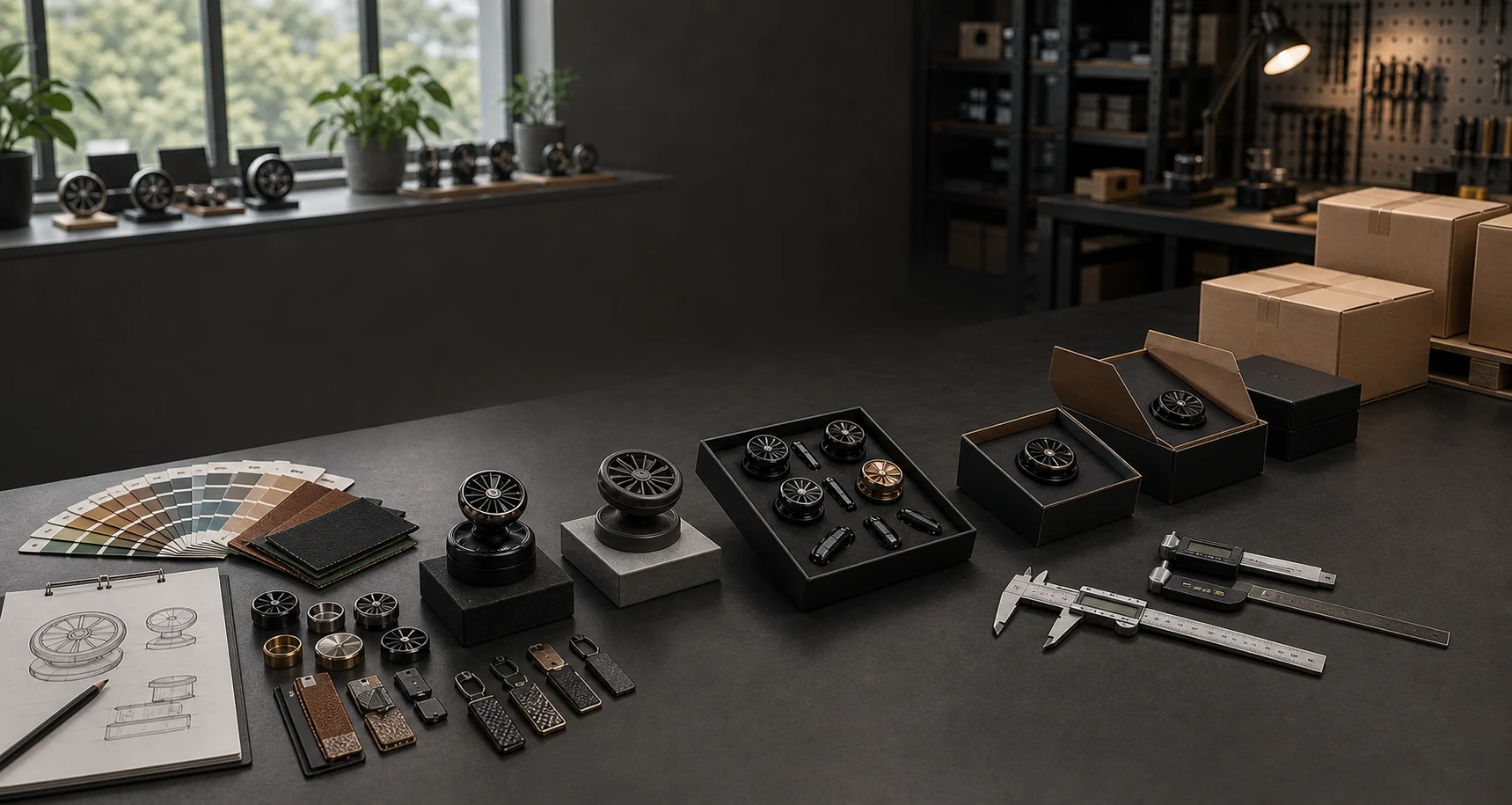
Approval Workflow From Shortlist to Production
1. Clean and authorize the vector. Prepare reproducible geometry and obtain approval for any simplification to the protected brand mark.
2. Match detail to process and size. Use supplier-confirmed limits on the exact material and check an actual-size proof at normal viewing distance.
3. Engrave a representative sample. Approve contrast, surface effect, orientation, alignment, curvature, assembly, package contact, and defects.
4. Archive the exact production record. Keep file, revision, dimensions, datum, component, material, coating, sample, inspection, and change triggers.
Do not let approval live only in chat messages. Keep the final quote, artwork proof, physical-sample decision, packaging revision, inspection plan, and delivery instruction in the same order record. The detailed MOQ and sample approval guide explains how quantity tiers and approval gates should stay connected.
Risk Controls and Authoritative References
The main risks for this decision are predictable when the team names them before purchase:
- Screen-only approval: Print at actual size and inspect the engraved sample under realistic light and viewing distance.
- Artwork changed without brand approval: Control simplification and obtain the rights owner’s approval before production files are released.
- Material or coating substitution: Tie the mark to the exact component and surface and require new samples after material, colour, coating, or supplier changes.
- Packaging scratches the mark: Review inlay and contact surfaces on a complete pack and include unacceptable rub or scratch examples.
The USPTO explains how marks identify the source of goods or services; the brand owner should control authorized artwork use and seek appropriate advice for its rights and markets. Review the USPTO trademark basics with the responsible specialist before the order is released.
Pantone's paper example shows a wider production principle: a named colour reference does not guarantee identical appearance across different substrates, coatings, finishes, and viewing conditions. Review the Pantone coated and uncoated guidance with the responsible specialist before the order is released.
These sources are starting points, not certificates for a LANDRE product and not legal advice. The importer, brand owner, marketplace, carrier, and destination-country adviser should confirm which duties apply to the exact product, formulation, claims, packaging, and route.
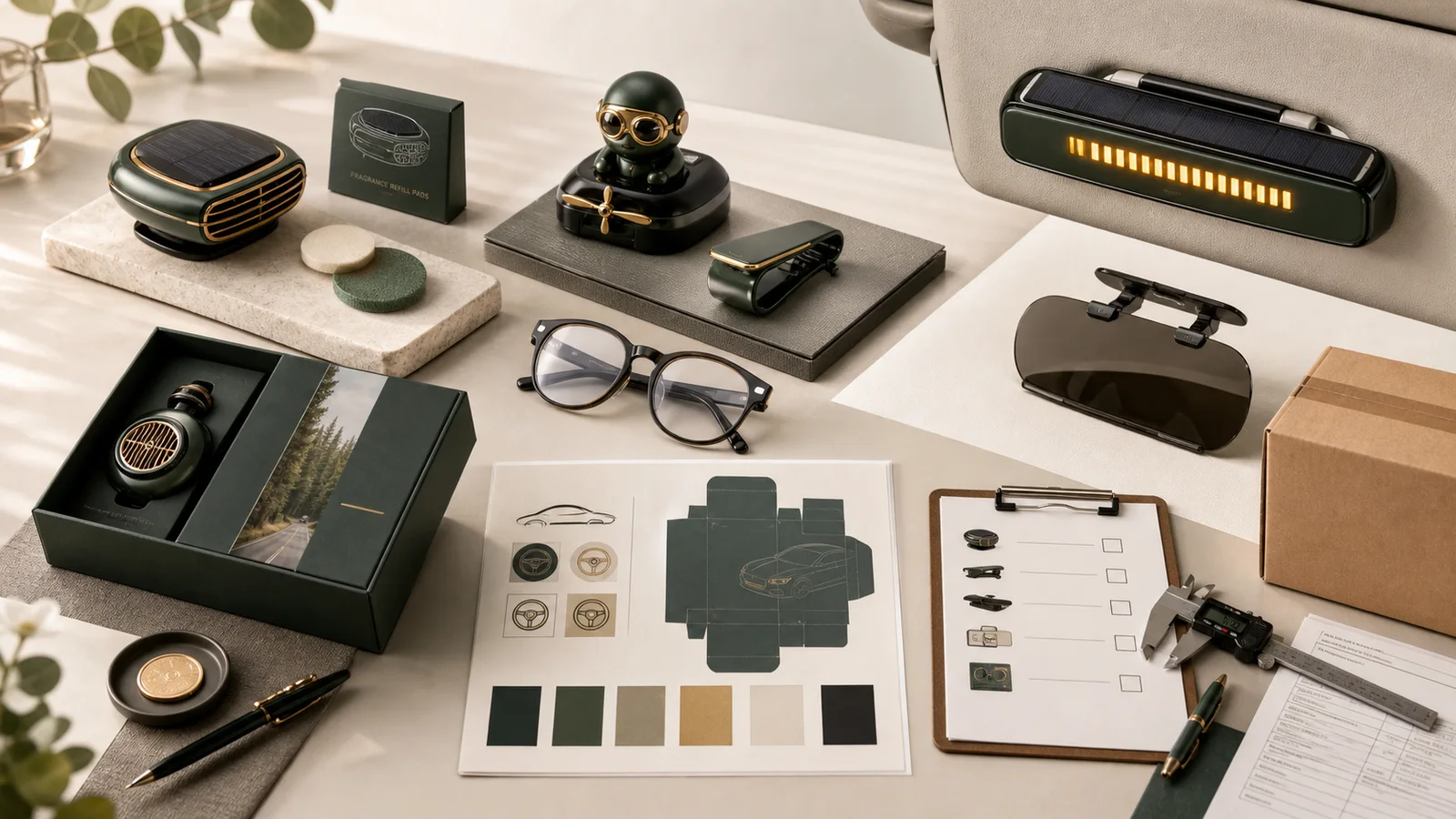
Budget, MOQ, and Timeline Controls
Request setup or fixture, engraving, extra position, sample, reject or rework, protective packing, and repeat-order setup charges separately. The same logo size on a curved or difficult component may require a different fixture and cycle than a flat plate. Lock material and coating before final sample approval. If several colours or finishes share one SKU family, sample each surface response rather than assuming an engraved result transfers across them.
Compare quotations on the same configuration. Separate unit price from artwork, tooling, samples, packaging, inspection, freight, duty, tax, distribution, and replenishment. Reserve time for buyer feedback and sample revision; a production lead time quoted before the artwork and sample are approved is not the same as a committed delivery date.
RFQ Checklist and Practical Next Step
Before sending the request, confirm:
- Authorized clean vector, one-colour variants, outlined fonts, clear space, minimum size, and revision.
- Named component, material, grade where relevant, colour, coating, texture, curvature, and finish.
- Laser method, dimensions, datum, orientation, protected zones, contrast, and process limits.
- Actual-size proof, normal-distance review, approved simplification, and brand sign-off.
- Engraved sample, installed view, surface effect, alignment, contrast, and visual defects.
- Package contact, scratch protection, golden sample, inspection, archive, and repeat-order record.
- Setup, fixture, additional positions, samples, rework, variant rules, and change control.
Use the laser engraving versus pad printing guide for the adjacent decision, then send LANDRE a structured inquiry with the product IDs, quantity, market, artwork, package, deadline, and unresolved questions. A precise brief produces a more comparable quote and a safer approval path than asking only for the cheapest unit price.